Section 13
The Benefactor Mayor
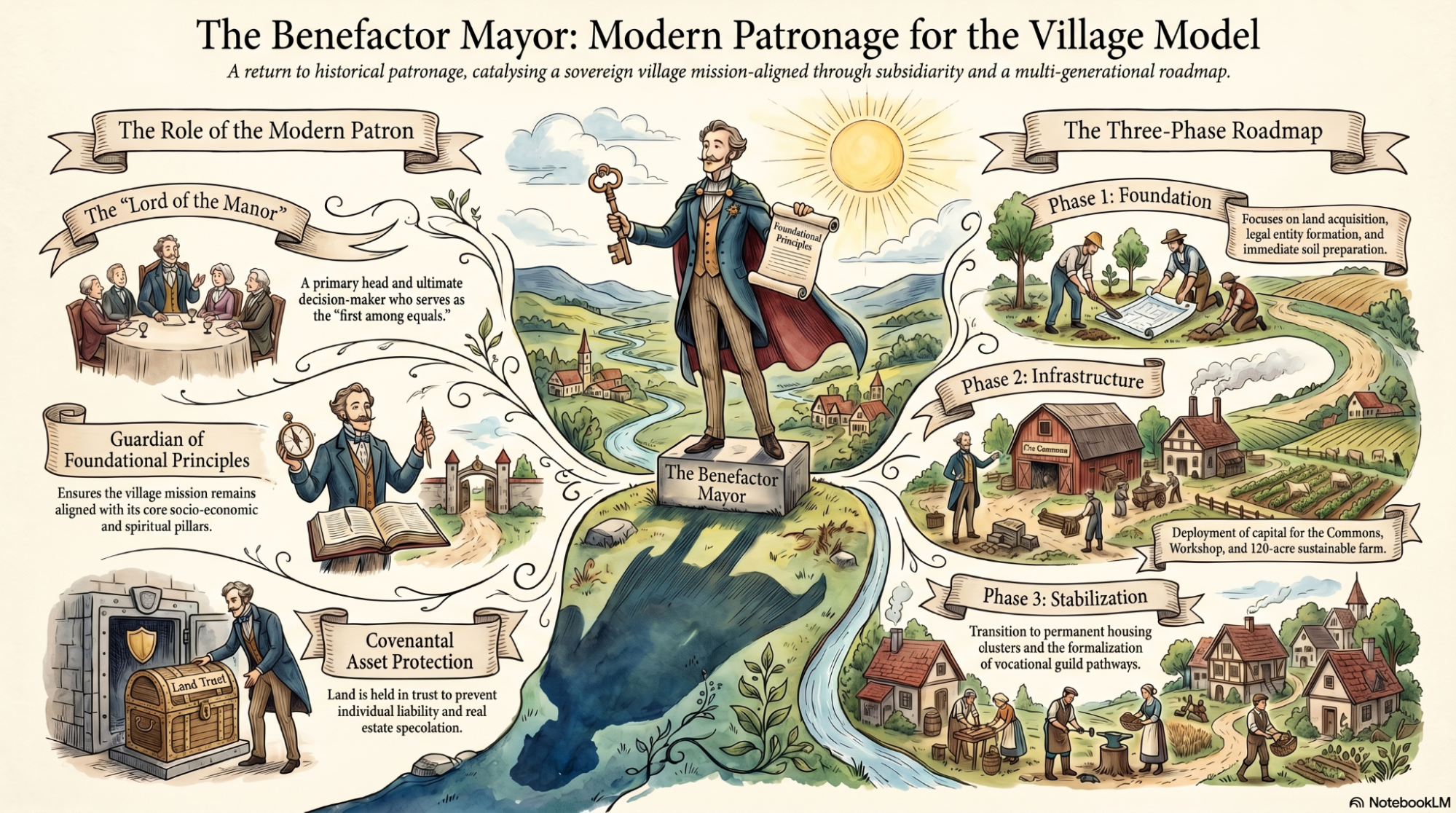
The Benefactor Mayor: Modern Patronage for the Village Model
The formation of an intentional village requires a substantial injection of initial capital, necessitating a return to historical models of patronage. Just as Roman Villas evolved into sanctuaries for peasants during eras of conflict, famine, and economic instability, modern benefactors have the opportunity to serve God and neighbor by dedicating their land and/or capital to initiate this project.
To secure this vision, a "Covenantal Entity" such as a non-profit is established to protect communal assets from individual liability and fragmentation. This structure facilitates the "Benefactor Mayor" model by providing a legal framework where land is held in trust, preventing real estate speculation and ensuring long-term affordability through 99-year land leases for residents.
While the benefactor holds ultimate authority, the principle of subsidiarity is exercised through a tiered governance rhythm, including a Village Council composed of the men of the community responsible for daily operations.